









Troy University Athletics
Youth Baseball: Curve Balls Out, Showers In
3/27/2008 5:00:00 AM | Baseball
For many in Alabama, early spring signals more than just the arrival of warmer
temperatures. It's the beginning of baseball season.
Athletic trainers at Troy University ? who see and treat
many youth sports injuries in southeast Alabama ? say conditioning is the key to
a successful baseball season, whether its school-based play or on recreational
league teams.
“Warming up properly is a key,” said John “Doc”
Anderson, associate professor and chair of Athletic Training Education at the
University.
“Run first, then do a ballistic warm-up and then
stretch,” he said.
Among other tips for baseball
players:
- Drink plenty of
fluids such as Gatorade, PowerAde or water and stay
- Save those arms ?
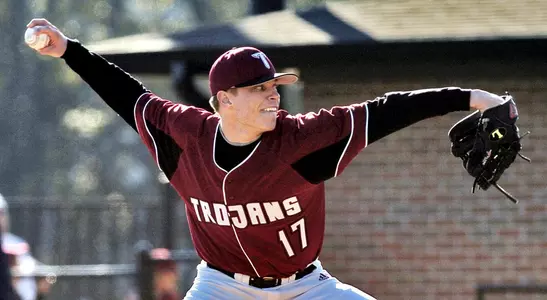
young pitchers shouldn't throw curve balls and Anderson cautions pitchers from
throwing too much
- When the shoulder or
elbow starts to hurt, stop throwing and “see the medical staff at Troy
University ASAP,” Anderson said.
Troy University senior pitcher J.J. Whetsel knows the
value of saving an arm early in a baseball career. Last season, a tear in his
ulnar collateral ligament required surgery. That injury, he told the Dothan Eagle, was caused by throwing
breaking balls before his body had fully developed.
“Throwing curve balls at an early age isn't good,” he
said. “I didn't know that then. I would have just laid off them, throwing just
changeups and fastballs ? but I'll do that for my
kid.”
TROY head baseball coach Bobby Pierce echoed Whetsel's
advice: “There are two things to remember. First, younger players throw it
incorrectly. If they do throw it correctly, the growth plates really aren't in a
position to support the elbow area for that pitch.”
For collegiate baseball hopefuls, Pierce said the damage
from throwing the pitch could result in injuries that would dash any chance of
playing college-level baseball.
Anderson said another issue for athletes is that of
staying clean. In short, Anderson's advice is to “take a
shower.”
“One of my biggest concerns for kids is staph
infection,” he said. “That really scares me and we've had some deaths in Alabama
from them.”
The exact staph infection: MRSA, or Methicillin
Resistant Staphylococcus Aureus, an antibiotic-resistant skin infection that has
been reported in clusters since 2000 within the competitive sports population.
The bacteria is being spread among participants in competitive sports that often
have risk factors for infection including cuts, scraps, open wounds, skin trauma
from turf burns and shaving. The bacteria is believed to be transmitted through
skin-to-skin contact, sharing towels or equipment, according the National
Collegiate Athletics Association's Committee in Competitive Safeguards and
Medical Aspects of Sports.
Dr. Amanda Andrews, also a professor of athletic
training education at TROY, recommends that ice be applied for 20 minutes to
strains and to alleviate swelling after a lot of
throwing.
As the temperature continues to rise, she also cautions
players and coaches to wear appropriate clothing ? such as breathable cottons ?
and keeping practice times out of the hotter times of the
day.
“Again, a key to successful practices is plenty of
fluids and watching for heat-related issues,” she
said.
When injuries do occur, she said it was important to
follow up with medical care.
Returning to play after any type of injury should be
only after a doctor has approved the player for activity.