




Troy University Athletics
4/27/2026 8:59:00 AM | Football
Fabian Rogosch still remembers the first time he believed it was possible, not just playing American football for fun in Germany or watching highlights late at night, but actually building a path to the United States to compete at the college level.
That idea did not come easily. It had to grow.
Rogosch grew up just outside Hamburg, where soccer dominates, and American football is a curiosity. Like most kids, he played a range of sports including soccer, handball and tennis. Football only entered the picture later, despite his father's early involvement.
It took a mix of timing and curiosity to change that.
"I started watching highlights," Rogosch said. "I saw Adrian Peterson, Ray Lewis, guys like that. I just kept clicking videos and thought, I want to do that."
He picked up the sport as a teenager, later than most American players. At first, he played quarterback for the Hamburg Swans, learning on the fly and relying on raw athleticism. But even then, there were signs that his path might look different.
One teammate, familiar with U.S. recruiting, offered advice that stuck:
If anyone here could do it, you could.
That was the spark Rogosch needed.
From there, Rogosch entered the world of international recruiting showcases. He attended a camp in Germany run by a program that identifies global talent and connects players with American colleges. He quickly stood out, earning an invitation to a summer tour where prospects travel to the U.S. to perform in front of college coaches.
Then everything stopped.
COVID shut down travel, canceled tours and delayed his opportunity by nearly two years. While players in the U.S. continued to develop within structured systems, Rogosch was largely on his own.
"It was very restrictive," he said. "No gyms, no practices. I trained in my room or outside by myself."
During that time, he worked in IT and software development, trying to balance a normal career with an uncertain dream. It would have been easy to move on. Instead, he doubled down.
A former player who had made the jump from Germany to Division I football returned home during the pandemic and helped reshape Rogosch's future. The message was direct. If you want to play in the United States, it will not be as a quarterback.
Rogosch listened.
He transitioned to the defensive line, learning the position from scratch. The change fit his size and physical style, but more importantly, it showed a willingness to adapt. That trait would define his journey.
When travel finally reopened in 2022, he made his long-awaited trip to the United States for summer camps. It did not go as planned. At his first stop, he tore his hamstring.
For many, that injury would have ended the journey. Not for Rogosch.
"I waited two years for that," he said. "I was not going home."
He pushed through multiple camps, performing in pain and doing whatever he could to be evaluated. His final stop was at Troy. Coaches noticed more than just his size. They saw toughness, persistence and a player willing to endure discomfort for a chance.
Shortly after returning to Germany, he got the call. He had an offer.
That moment changed everything.
Leaving home meant more than just switching teams. Rogosch moved across the world, away from his family and into a completely different culture. The adjustment was immediate and, at times, overwhelming.
The heat in Alabama hit first. Fall camp practices were unlike anything he had experienced.
"I had never played in heat like that," he said. "The humidity was the biggest adjustment."
Then came the language barrier. Rogosch understood English well enough, but speaking it fluently in a fast-paced football environment was a different challenge. Learning playbooks, communicating with teammates and handling daily life required constant effort.
At the same time, he was stepping into a culture where football carries a level of importance that does not exist in Germany.
"In Germany, it's a niche sport," he said. "Here, it's everything. People love it. It's like a religion."
That part, at least, felt right.
Inside the program, older players helped ease the transition. Teammates brought him in, showed him the routine and treated him like one of their own. For someone arriving without family or a support system nearby, that mattered.
"It was a warm welcome," he said. "That made it a lot easier."
On the field, his path was anything but straightforward. Rogosch arrived as a defensive end but did not see immediate playing time. The roster was deep with experienced players, and he understood his role.
Instead of pushing back, he embraced it.
"You have to find a way to contribute," he said. "You're not going to come in and be the star right away."
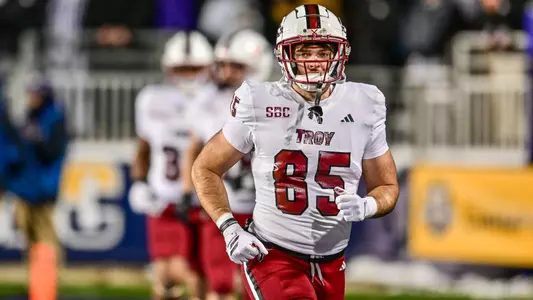
That mindset led to another major transition. With injuries impacting the roster, coaches approached him about switching to tight end. Once again, he said yes.
He spent nights in the film room, learning an entirely new position and absorbing as much as possible in a short period of time. His first snaps came on special teams. Then came limited offensive reps. Slowly, his role grew.
"I never looked back," he said.
Off the field, Rogosch continued adjusting to life in the United States. Some changes were small but meaningful. He learned to appreciate American barbecue and wings. He introduced teammates to German cooking, making meals like schnitzel and hosting small gatherings.
Other adjustments were more personal.
He missed home, especially his family and the comfort of familiar routines. Late-night calls helped bridge the gap. His father watches games from Germany, often staying up into the early morning hours to follow his son's progress.
When his sister visited Troy, it gave Rogosch a chance to share his new life with someone from home.
"That was a dream come true," he said.
Now, with his college career nearing its final chapter, Rogosch has a clear perspective on how far he has come. From a late start in Germany to navigating a pandemic, position changes and a new country, his journey has required constant adjustment.
The next step is simple in theory, though difficult in practice.
Make the most of what is left.
He plans to finish his degree, begin graduate studies and focus fully on football. A professional opportunity would be the ultimate goal. If it does not happen, he has built a foundation that extends beyond the field.
Still, the dream that started with late-night highlight videos has not faded.
It has just become more real.
And for Fabian Rogosch, that is enough motivation to keep going.
That idea did not come easily. It had to grow.
Rogosch grew up just outside Hamburg, where soccer dominates, and American football is a curiosity. Like most kids, he played a range of sports including soccer, handball and tennis. Football only entered the picture later, despite his father's early involvement.
It took a mix of timing and curiosity to change that.
"I started watching highlights," Rogosch said. "I saw Adrian Peterson, Ray Lewis, guys like that. I just kept clicking videos and thought, I want to do that."
He picked up the sport as a teenager, later than most American players. At first, he played quarterback for the Hamburg Swans, learning on the fly and relying on raw athleticism. But even then, there were signs that his path might look different.
One teammate, familiar with U.S. recruiting, offered advice that stuck:
If anyone here could do it, you could.
That was the spark Rogosch needed.
From there, Rogosch entered the world of international recruiting showcases. He attended a camp in Germany run by a program that identifies global talent and connects players with American colleges. He quickly stood out, earning an invitation to a summer tour where prospects travel to the U.S. to perform in front of college coaches.
Then everything stopped.
COVID shut down travel, canceled tours and delayed his opportunity by nearly two years. While players in the U.S. continued to develop within structured systems, Rogosch was largely on his own.
"It was very restrictive," he said. "No gyms, no practices. I trained in my room or outside by myself."
During that time, he worked in IT and software development, trying to balance a normal career with an uncertain dream. It would have been easy to move on. Instead, he doubled down.
A former player who had made the jump from Germany to Division I football returned home during the pandemic and helped reshape Rogosch's future. The message was direct. If you want to play in the United States, it will not be as a quarterback.
Rogosch listened.
He transitioned to the defensive line, learning the position from scratch. The change fit his size and physical style, but more importantly, it showed a willingness to adapt. That trait would define his journey.
When travel finally reopened in 2022, he made his long-awaited trip to the United States for summer camps. It did not go as planned. At his first stop, he tore his hamstring.
For many, that injury would have ended the journey. Not for Rogosch.
"I waited two years for that," he said. "I was not going home."
He pushed through multiple camps, performing in pain and doing whatever he could to be evaluated. His final stop was at Troy. Coaches noticed more than just his size. They saw toughness, persistence and a player willing to endure discomfort for a chance.
Shortly after returning to Germany, he got the call. He had an offer.
That moment changed everything.
Leaving home meant more than just switching teams. Rogosch moved across the world, away from his family and into a completely different culture. The adjustment was immediate and, at times, overwhelming.
The heat in Alabama hit first. Fall camp practices were unlike anything he had experienced.
"I had never played in heat like that," he said. "The humidity was the biggest adjustment."
Then came the language barrier. Rogosch understood English well enough, but speaking it fluently in a fast-paced football environment was a different challenge. Learning playbooks, communicating with teammates and handling daily life required constant effort.
At the same time, he was stepping into a culture where football carries a level of importance that does not exist in Germany.
"In Germany, it's a niche sport," he said. "Here, it's everything. People love it. It's like a religion."
That part, at least, felt right.
Inside the program, older players helped ease the transition. Teammates brought him in, showed him the routine and treated him like one of their own. For someone arriving without family or a support system nearby, that mattered.
"It was a warm welcome," he said. "That made it a lot easier."
On the field, his path was anything but straightforward. Rogosch arrived as a defensive end but did not see immediate playing time. The roster was deep with experienced players, and he understood his role.
Instead of pushing back, he embraced it.
"You have to find a way to contribute," he said. "You're not going to come in and be the star right away."
That mindset led to another major transition. With injuries impacting the roster, coaches approached him about switching to tight end. Once again, he said yes.
He spent nights in the film room, learning an entirely new position and absorbing as much as possible in a short period of time. His first snaps came on special teams. Then came limited offensive reps. Slowly, his role grew.
"I never looked back," he said.
Off the field, Rogosch continued adjusting to life in the United States. Some changes were small but meaningful. He learned to appreciate American barbecue and wings. He introduced teammates to German cooking, making meals like schnitzel and hosting small gatherings.
Other adjustments were more personal.
He missed home, especially his family and the comfort of familiar routines. Late-night calls helped bridge the gap. His father watches games from Germany, often staying up into the early morning hours to follow his son's progress.
When his sister visited Troy, it gave Rogosch a chance to share his new life with someone from home.
"That was a dream come true," he said.
Now, with his college career nearing its final chapter, Rogosch has a clear perspective on how far he has come. From a late start in Germany to navigating a pandemic, position changes and a new country, his journey has required constant adjustment.
The next step is simple in theory, though difficult in practice.
Make the most of what is left.
He plans to finish his degree, begin graduate studies and focus fully on football. A professional opportunity would be the ultimate goal. If it does not happen, he has built a foundation that extends beyond the field.
Still, the dream that started with late-night highlight videos has not faded.
It has just become more real.
And for Fabian Rogosch, that is enough motivation to keep going.



Players Mentioned
TE
/ FootballMonday, October 26
Saturday, October 24
Saturday, October 24
Thursday, October 22